
The Corner That Changed Everything: Kozy Korner and the Hidden History of Myrtle Beach
The former Mayor of Myrtle Beach, Brenda Bethune purchased the property a few years ago. Now, developers are looking to tear down the historic Kozy Korner. What follows is the complete narrative on the building and the history other news outlets failed to report.
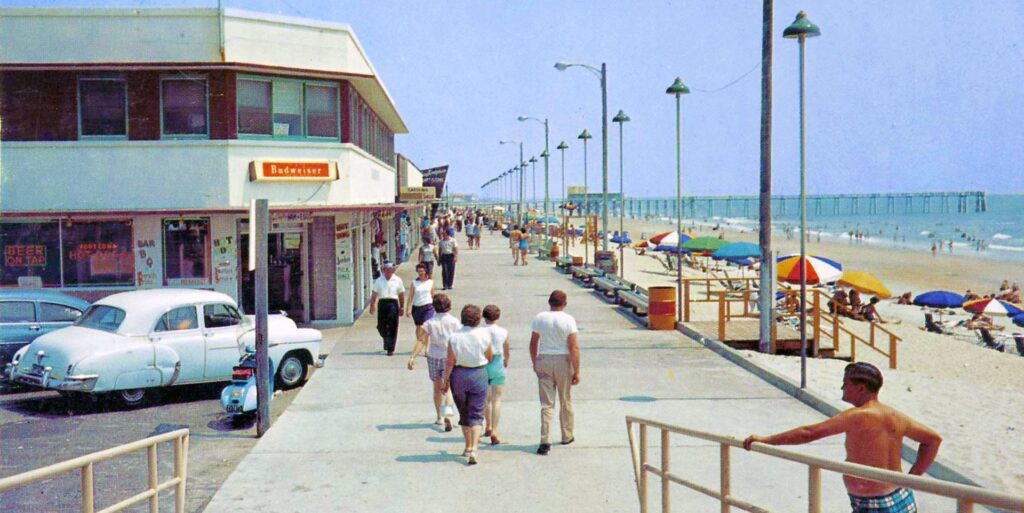
There is a triangular sliver of a building at 815 Main Street in Myrtle Beach, South Carolina — wedged at a street corner two blocks from the Atlantic Ocean, across from where the old Pavilion amusement park once spun its Ferris wheels. Today, a restaurant called Winna’s Kitchen occupies its tip.
Tourists pass it without a second glance. But for much of the twentieth century, this modest diner operated under the name Kozy Korner Café, and what happened inside those walls quietly rewrote what was possible in a segregated Southern city.
To understand Kozy Korner is to understand that American history rarely announces itself — it often happens over a plate of eggs, between a Marine and a cook, or across a diner counter where the rules were quietly, stubbornly ignored.
A Family Finds Its Home by Accident
The story of Kozy Korner’s most famous chapter begins with a detour. After World War II, a Greek-American couple named Tony and Angie Thompson were driving through Myrtle Beach en route to Florida, hoping to start a new life by opening a diner.
They stopped at a local café called Kozy Korner for lunch. As recounted by their son Dino in interviews with Visit Myrtle Beach, the proprietor struck up a conversation, learned of their ambitions, and revealed that his establishment was available for lease — apartment upstairs included.
By the end of the afternoon, Tony Thompson was introducing himself as the new owner [Visit Myrtle Beach, 2022].
It was a quintessentially American moment: a family of immigrants buying into a corner of the country that was, technically, not supposed to be open to everyone.
From Dino’s upstairs bedroom, the whole world was visible — the beach two blocks away, the amusement park across the street, the bustle of downtown. He would eventually become the night manager at age ten, running the register while his parents operated their upscale steakhouse, the Black Angus, nearby. The Kozy Korner was the first of nine restaurants
Tony Thompson would own in Myrtle Beach, and Dino worked at every one of them.
What makes this origin story remarkable is not its immigrant hustle — though that alone is worthy of note. It is that the Thompsons arrived as outsiders themselves, and perhaps because of that, they ran their diner with a set of values that placed them decades ahead of their community.
They weren’t making history, as Dino would later write — they were making a living. The distinction mattered.
An Integrated Table in a Segregated South
In the mid-1940s, when virtually every restaurant in South Carolina excluded Black customers from dining rooms — relegating them to side doors for takeout orders at best — the Kozy Korner was already seating them at tables.
The Thompsons’ most prominent Black guest was a man named Charlie Fitzgerald, owner of a nightclub and motel on nearby Carver Street known as Charlie’s Place [Grand Strand Magazine, 2019].
Fitzgerald was a towering figure in Myrtle Beach’s Black community. He and his wife Sarah had founded their establishment in 1937, building it into a nationally known stop on the Chitlin’ Circuit, where Black performers could play, eat, and rest safely during the Jim Crow era [National Park Service].
The Fitzgerald Motel was listed in the 1953 Negro Motorist Green Book, the essential travel guide that helped Black Americans navigate a country that treated them as unwelcome guests in their own nation [NPS, Charlie’s Place].
The relationship between the Thompson family and Charlie Fitzgerald was one of genuine mutual respect. Tony Thompson would bring young Dino along to Charlie’s Place to share a drink with his friend, and Dino would play the pinball machine while the men talked [Visit Myrtle Beach, 2022].
Fitzgerald, in turn, was a regular at the Kozy Korner dining room — a fact that was not lost on the community. On at least one occasion, a group of Black children from a nearby neighborhood ran to peer through the Kozy Korner’s plate-glass window because they had heard something almost unbelievable: that a Black man was eating inside a white restaurant.
The children were stunned. According to what Dino was later told, the moment was life-changing for all of them.
This is not a small thing. To allow a Black man to eat at your counter in 1940s South Carolina required either unusual courage or unusual indifference to the social order — and the Thompsons appear to have had both. They saw hungry people, not categories.
In doing so, they created a space that served as a quiet, daily counterargument to segregation’s central lie: that the races could not coexist as equals.
When the Marines Came to Town
The Kozy Korner’s unusual openness was put to a larger test beginning around 1951, when the United States Marine Corps began sending large groups of recruits into Myrtle Beach on supervised excursions.
As Dino Thompson described in vivid detail for Grand Strand Magazine, the arrivals were theatrical events — Greyhound buses growling down the road, drill sergeants screaming, local girls congregating on the sidewalk, and old veterans saluting from the curb [Grand Strand Magazine, 2019].
The contract to feed these Marines went to the Kozy Korner, and it was not by accident. Other restaurants in the area declined to bid for a simple reason: the military had begun integrating, and some of the Marines were Black or Hispanic.
In a county where the only non-white faces in dining rooms were those of the staff, no other establishment was willing to take the business. The Thompsons were [Grand Strand Magazine, 2019].
Here the historical significance sharpens. The Kozy Korner was not operating as a civil rights organization — it was operating as a business.
And yet, by simply applying a consistent standard of service regardless of a customer’s race, it became a site of integration years before the law required it. The café served integrated platoons of Marines in the same booths where Charlie Fitzgerald and white locals ate their meals.
The ordinariness of it, repeated week after week, season after season, was perhaps the most powerful argument of all.
The so-what here is this: transformative change rarely announces itself with a manifesto. It often arrives in the form of a diner that simply decides to feed everyone.
Music, Dance, and the Cross-Cultural Current
The relationship between the Kozy Korner and Charlie’s Place was not merely diplomatic — it was cultural. Dino Thompson grew up absorbing the music that poured out of Charlie’s Place on Carver Street, and the influence ran both ways.
As recorded in Library of Congress oral history interviews, Thompson was among the white teenagers who crossed into the historically Black Booker T. Washington neighborhood to hear the Chitlin’ Circuit’s greatest performers: Ruth Brown, Big Joe Turner, Amos Milburn, Little Richard, The Drifters, and others [Library of Congress, AFC 2018/029].
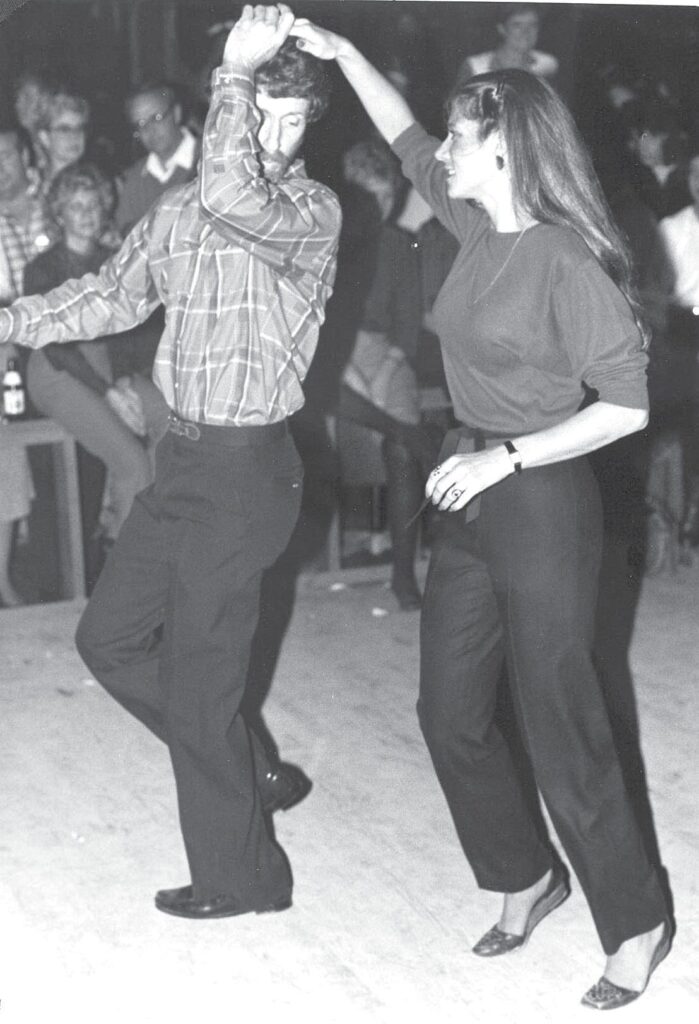
At Charlie’s Place, a hostess named Cynthia “Shag” Harrell was teaching guests dances she had brought back from Harlem’s clubs — a series of moves that would eventually be codified as the Carolina Shag, today the official state dance of South Carolina [SC Living, 2023].
White teenagers from the Thompson family’s neighborhood were in those rooms, learning steps they could not find anywhere else. Beach Music, that distinctly South Carolinian genre, was being born in the charged space between Black performance and integrated audiences.
The Kozy Korner was the institutional anchor of this world — a place where Charlie Fitzgerald was welcome, where the families of Myrtle Beach’s workforce came to eat, where Marines of every background shared tables.
It was connected, by the thread of the Thompson family’s relationships, to the cultural ferment happening a few blocks away. The diner did not create Beach Music. But it helped maintain the web of human connection that made it possible.
What the Building Holds Now
The Kozy Korner Café is long gone. The building at 815 Main Street still stands in what is now Myrtle Beach’s designated historic district, the triangular tip housing Winna’s Kitchen. Adjacent Nance Plaza hosts the Grand Strand Brewing Company.
Dino Thompson still runs his restaurant, the Flamingo Grill, where he has worked alongside his business partner for four decades — and where he sells copies of his memoir, Greek Boy: Growing Up Southern, which documents his childhood at the Kozy Korner in detail [Visit Myrtle Beach, 2022].
Meanwhile, Charlie’s Place has been more formally reclaimed. In 2015, the City of Myrtle Beach began restoring the Fitzgerald property. Today it operates as a living museum and community center, part of the African American Civil Rights Network and host to the annual Myrtle Beach Jazz Festival [WPDE, 2025; NPS].
The two sites tell a story that neither can tell alone. Charlie’s Place represents Black entrepreneurship and cultural creation under duress — the extraordinary effort required to build joy and dignity in a system designed to prevent both.
The Kozy Korner represents something rarer in the historical record: a white-owned business that simply refused to play by the era’s ugliest rules, not out of political conviction but out of a stubborn, immigrant pragmatism that saw all hungry people as the same.
Together, they reveal a Myrtle Beach that has always been more complicated than its postcard image suggests — a city where the lines of race were enforced violently enough that the Ku Klux Klan beat Charlie Fitzgerald half to death in 1950, and yet permeable enough that a Greek-American kid was playing pinball at a Black nightclub and watching Little Richard’s first hit performance.
Conclusion: The Corner as a Lens
History tends to award its laurels to the dramatic and the documented: court cases, marches, speeches.
But the slow work of normalization — the daily decision to seat a Black man at a white lunch counter, to fill a Marine Corps contract for an integrated platoon, to let your ten-year-old son walk over to Carver Street and dance — is harder to archive and easier to forget.
The Kozy Korner deserves its place in Myrtle Beach’s history not because it was heroic, but because it was consistent. The Thompsons did not need the Civil Rights Act to tell them that Charlie Fitzgerald deserved a seat at the table.
They already knew. And in the decades when that knowledge was dangerous and rare, their corner diner was one of the few places in Horry County where it was expressed, day after day, in the simplest possible form: a meal served without conditions.
That building at the corner of Main Street still stands. It is worth looking at twice before it is demolished.
Further Reading
Local News Via - MyrtleBeachSC.com