
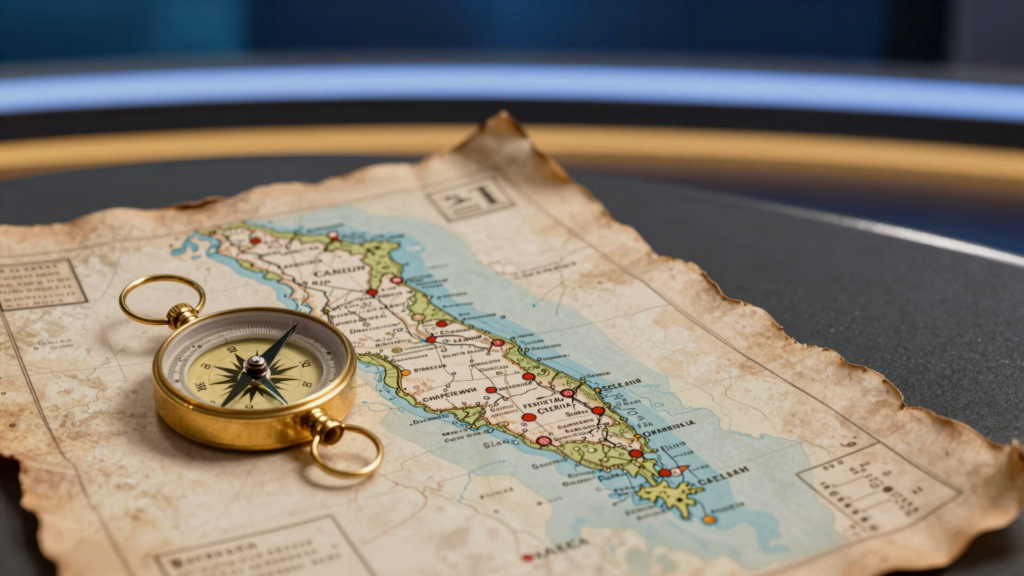
The Hucks Family: Four Centuries from Jamestown Virginia to the Carolina Lowcountry
A Genealogical Journey Through Colonial America and the Rise of a Horry County Legacy
MyrtleBeachSC News was founded by David Hucks of Myrtle Beach in 2004. The Hucks family first arrived in Jamestown Virginia in 1607 and were among the first English people in America.
Of the approximately 104 to 108 original settlers who arrived at Jamestown in May 1607, roughly 66 to 70 died within the first year. By January 1608, only about 38 survivors remained due to starvation, disease, and conflicts with local tribes. The Hucks family were among the few to survive these brutal first few years.
Introduction
For those of us who call Horry County home, the name Hucks resonates with a deep sense of place. It is stitched into the fabric of old church records, plantation ledgers, and cemetery stones scattered across the coastal parishes of South Carolina. But the roots of this family reach far deeper — and far farther — than the sandy soil of the Pee Dee region.
The Hucks line can be originally traced across the Atlantic Ocean to Sir William Hux and his wife Lady Harriett Rimn Hucks. The name would later be changed to Hucks. Sir William and Lady Harriett served in Queen Elizabeth’s court in the late 1550’s.
Joseph Hucks, Sir William’s son, left Gloucester, England in 1606, and arrived in America in 1607 through the desperate early years of Jamestown, Virginia, into the tidewater parishes of Surry County.
In 1702, the family would ultimately move southward into the tobacco and rice-rich lowcountry of Prince William Parish, South Carolina. They migrated into what is today Conway. The family focused on growing tobacco and harvested timber.
This is a story that spans roughly four hundred years and concludes, for the purposes of this article, with the death of John Washington Hucks on December 10, 1979, the death of his son, J.L. Hucks in Mullins, to now his Grandson David Hucks, who is a partner at MyrtleBeachSC News.
Understanding families like the Hucks is not merely an exercise in genealogical curiosity. It is a way to understand how the Lowcountry was built, who built it, and what legacies — the unremarkable, the luminous and complicated — left behind for communities like ours.
From Gloucester to Jamestown: The Founding Generation
Joseph Hucks, born around 1580 in Gloucester, England, was among the waves of Englishmen drawn to the Virginia Colony during its turbulent infancy [Hucks Family Records; Early Virginia Settlers].
Gloucester, a prosperous market town on the River Severn, produced many adventurers willing to risk the Atlantic crossing for the promise of land and opportunity. Joseph made that crossing and ultimately died in Jamestown, Virginia, in 1650.
Life in early Jamestown was brutal. The “Starving Time” of 1609–1610, recurrent conflicts with the Powhatan Native American Confederacy. Rampant disease killed the vast majority of settlers.
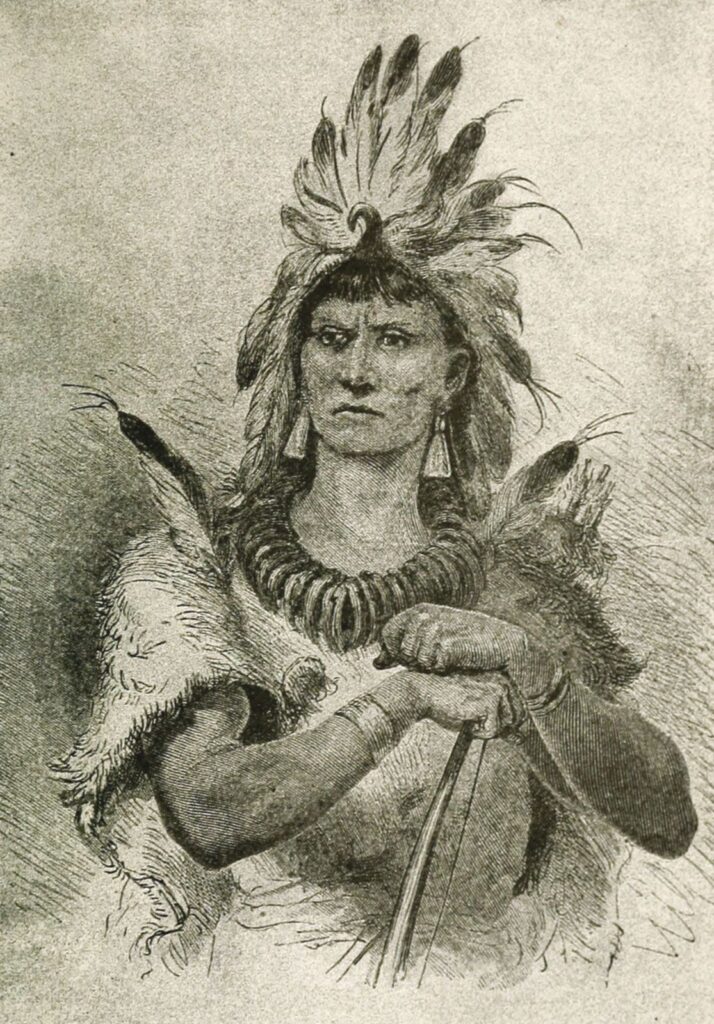
That Joseph survived long enough to establish a family line speaks to either remarkable resilience or fortunate timing — he arrived during the colony’s worst years. Later, the area experienced a period of relative stabilization under Sir Thomas Dale and, even later, the area witnessed a tobacco boom of the 1620s [Hatch, The First Seventeen Years: Virginia, 1607–1624].
Joseph’s son, John Donald Hucks, carried the family forward in America. John Donald died in 1661 in Jamestown, placing him squarely in the generation that transformed Virginia from a precarious outpost into a functioning colonial society.
By the mid-seventeenth century, Jamestown’s settlers were establishing county courts, accumulating land patents, and building the political architecture that would define Virginia for the next century [Billings, The Old Dominion in the Seventeenth Century].
So what does this mean for us locally? The Hucks family’s survival in early Virginia placed them in a position to benefit from the colony’s expansion. Without that foothold, the family would never have migrated southward into the Carolinas. Every Hucks headstone in Horry County begins, in a sense, with Joseph’s decision to board a ship for the New World.
The Gray Connection: Surry County and the Tidewater Network
Intertwined with the Hucks line is the Gray family, whose presence in colonial Virginia was equally significant. Thomas Gray I, born in 1593 in Northumberland, England, settled in Virginia and died in 1658 in Surry County [Gray Family Papers; Surry County Records]. Northumberland, England’s northernmost county, was a harsh and remote frontier in its own right — perhaps ideal preparation for the Virginia wilderness.
Thomas Gray’s establishment in Surry County is noteworthy. Surry, located south of the James River, was formally organized in 1652 and became one of Virginia’s most important early counties. Settlers there cultivated tobacco, raised livestock, and participated in the fur trade with neighboring Indigenous peoples [Boddie, Colonial Surry].
Margaret Gray, born in 1599 in England, died on January 24, 1625, in Surry, Virginia was the daughter of Lady C Le Strange. Her early death — at approximately twenty-six years of age — is a sobering reminder of the mortality that defined colonial life. The year 1625 was particularly devastating: the aftermath of the Powhatan attack of 1622 still lingered, food supplies remained precarious, and disease was endemic.
Margaret’s passing represents the countless women whose contributions to colonial survival went largely unrecorded [McCartney, Virginia Immigrants and Adventurers, 1607–1635].
She and Thomas married having a daughter named Jone Gray. Jone Gray married John Donald Hucks, Joseph Hucks’ son.
The intermarriage of the Hucks and Gray families — a pattern common among Virginia’s planter class — created kinship networks that functioned as economic and political alliances. These networks would prove critical as younger generations looked southward for new land.
So what? The Gray–Hucks connection illustrates how colonial families built resilience through marriage. These weren’t merely romantic unions; they were strategic mergers of land, labor, and social standing that enabled families to survive and expand across generations.
The Southward Migration: From Virginia to Prince William Parish
By the late seventeenth and early eighteenth centuries, Virginia’s best tidewater lands were claimed. Younger sons and ambitious planters increasingly looked to the Carolina Proprietary — established by the Lords Proprietors’ charter of 1663 — as the next frontier [Edgar, South Carolina: A History].
The Hucks family was part of this great southward migration. Families from Surry County and the surrounding Virginia tidewater were among the most prominent settlers of the Carolina lowcountry. They brought with them Virginia’s plantation culture, its Anglican religious traditions, and its social hierarchies.
In 1704, Thomas Hucks Jr., who was born in Surry, Virginia, died and was buried in what is now Conway, South Carolina. The entire Coastal area was named Prince William Parish at the time.
Prince William Parish, established by the South Carolina colonial assembly in 1745, encompassed a vast territory in the Georgetown District out west to the town of what is now Florence today. The Coastal region was rice country — flat, swampy, crisscrossed by tidal rivers that could be engineered into the elaborate dike-and-trunk systems that made Carolina rice cultivation enormously profitable [Coclanis, The Shadow of a Dream: Economic Life and Death in the South Carolina Low Country].
The Hucks family integrated themselves into this world. Parish records, land grants, and tax rolls from the eighteenth century document their growing presence. They were planters, they were churchgoers at Prince William’s Anglican chapels, and they participated in the local governance structures — vestry boards, militia musters, and road commissions — that defined lowcountry civic life [Prince William Parish Vestry Records; Georgetown District Land Records].
So what does this mean for Horry County? Prince William Parish’s boundaries encompassed much of what would become our home territory. The Hucks family’s establishment there was not merely a personal achievement; it was part of the broader settlement pattern that created the communities, roads, and institutions that Horry County inherited when it was carved out of Georgetown District in 1801.
The Revolutionary Era Through the Antebellum Period
The Hucks family, like virtually every established lowcountry family, was shaped by the cataclysms of the American Revolution and the Civil War. During the Revolution, the Georgetown District saw significant partisan warfare, with families forced to declare loyalties to either Crown or Patriot cause [Lambert, South Carolina Loyalists in the American Revolution].
Through the antebellum period, the Hucks name continued to appear in census records, deed books, and church registries across the parishes south of Georgetown. They were part of a planter class that grew tobacco. They never depended on enslaved labor, however, the wealthy class in this area did. That is a reality that must be acknowledged honestly. The wealth that built lowcountry churches, courthouses, and plantations was extracted from the bodies of enslaved Africans and African Americans. [Ball, Slaves in the Family; Joyner, Down by the Riverside].
So what? For Horry County residents seeking to understand local history fully, the antebellum period demands nuance. Celebrating ancestral resilience and confronting ancestral complicity are not contradictory acts — they are both essential to honest memory.
John Washington Hucks: The End of an Era
The documented Hucks line, for the purposes of this article, culminates with John Washington Hucks, who was born in 1904 west of Conway, died on December 10, 1979, in Charleston, South Carolina [South Carolina Death Records; Charleston County Probate Records].
His very name — Washington — signals the family’s deep identification with American patriotic tradition, a naming convention common among Southern families with colonial roots. Richard Washington, born in Surry Virginia in 1660, was John Washington Hucks 5th great grandfather. Richard Washington’s brother Lawrence Washington was George Washington’s grandfather.
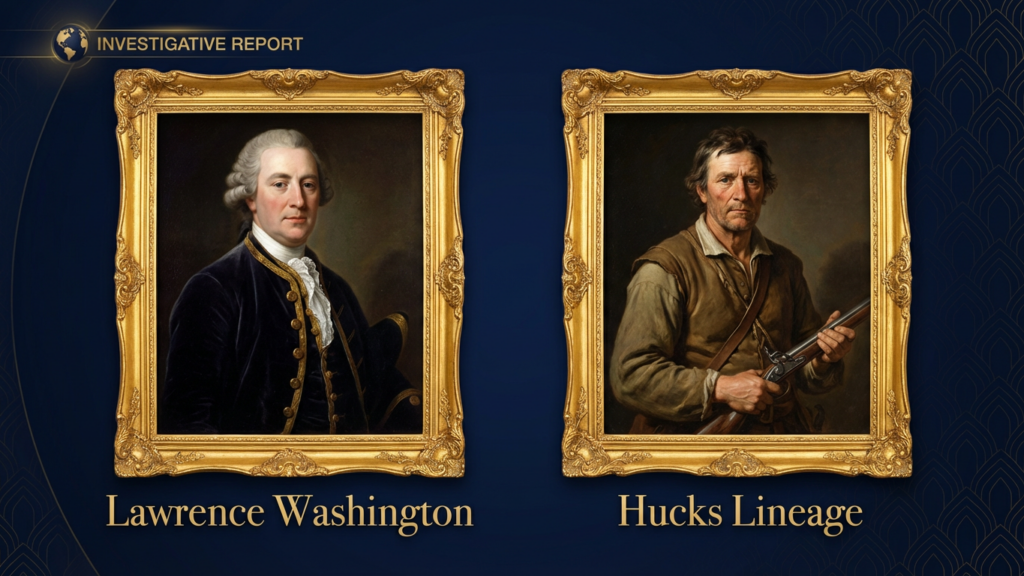
By the twentieth century, the Hucks family had dispersed across the lowcountry and largely remain in Horry County.
Many, like J.L. Hucks followed the patterns of urbanization at the Shipyards in Charleston, served in the military, and saw the economic changes that transformed the rural South.
John Washington Hucks’s death at M.U.S.C in Charleston in 1979 left the family legacy to his one son John L. Hucks. J.L. Hucks who died who died in 2002 is the father of David Hucks, a founding partner in MyrtleBeachSC News.
So what? The founding on MyrtleBeachSC News in 2004 started a new chapter that began nearly four hundred years earlier in Gloucester, England. The news organizaton bridges the old rural lowcountry and the modern urbanizing South — a transition that Horry County residents know intimately.
Conclusion
The Hucks family story is, in many ways, the American story in miniature: European migration, colonial survival, westward and southward expansion, revolution, witnessing the sin of slavery, civil war, reconstruction, and modern transformation.
For Horry County locals, it is also a deeply local story — one written in parish records, property lines, and family Bibles that still sit in attics and archives across our region. By tracing families like the Hucks from their English origins through Jamestown, Surry County, Prince William Parish, and ultimately to twentieth-century Myrtle Beach, we gain not just genealogical facts but a richer understanding of how Horry County and MyrtleBeachSC News came to be.
📚 Further Reading
- Billings, Warren M. The Old Dominion in the Seventeenth Century. University of North Carolina Press, 2007.
- Boddie, John Bennett. Colonial Surry. Genealogical Publishing, 1948.
- Coclanis, Peter A. The Shadow of a Dream: Economic Life and Death in the South Carolina Low Country, 1670–1920. Oxford University Press, 1989.
- Edgar, Walter. South Carolina: A History. University of South Carolina Press, 1998.
- Joyner, Charles. Down by the Riverside: A South Carolina Slave Community. University of Illinois Press, 1984.
- Ball, Edward. Slaves in the Family. Farrar, Straus and Giroux, 1998.
- McCartney, Martha W. Virginia Immigrants and Adventurers, 1607–1635. Genealogical Publishing, 2007.
- Lambert, Robert Stansbury. South Carolina Loyalists in the American Revolution. University of South Carolina Press, 1987.
- Hatch, Charles E. The First Seventeen Years: Virginia, 1607–1624. University Press of Virginia, 1957.
- South Carolina Department of Archives and History
- Surry County, Virginia Historical Society
- Georgetown County Digital Library
Local News Via - MyrtleBeachSC.com